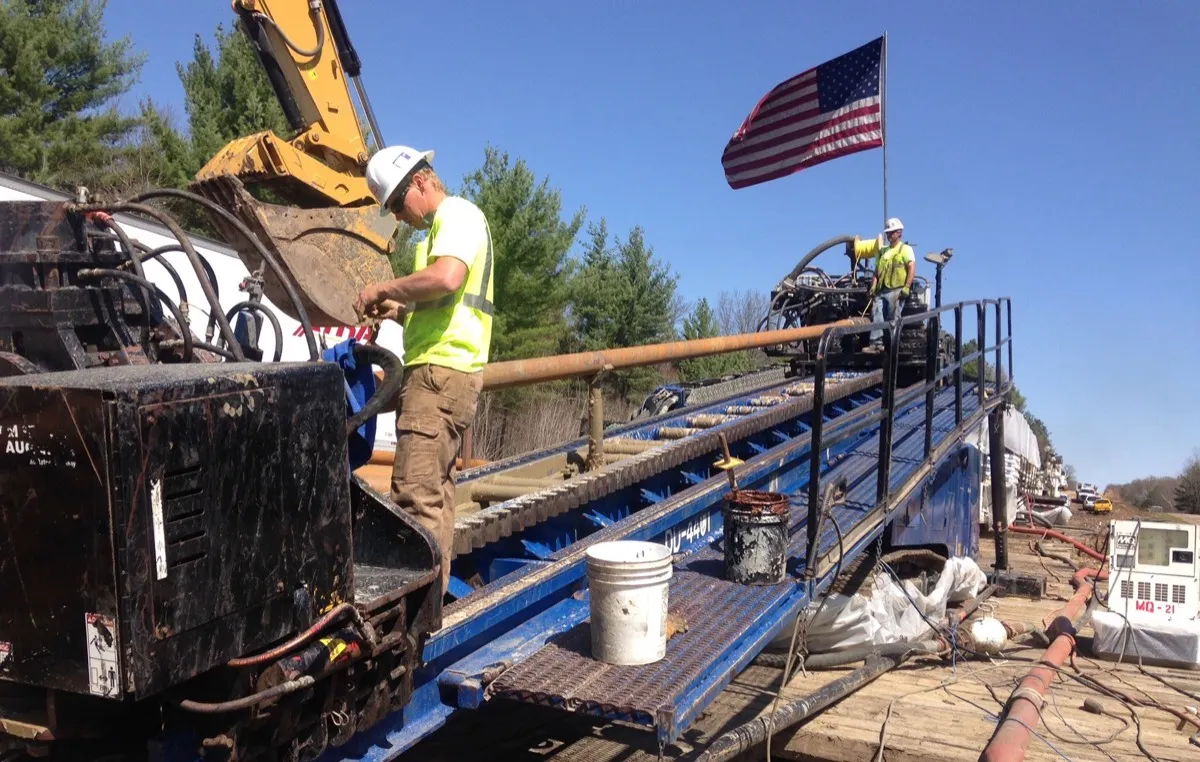
Horizontal Directional Drilling Contractor in Indiana
Indiana runs from glacial till in the north to karst limestone in the south, with big rivers throughout. For crossings anywhere in the state, NCDD fields maxi rigs and serious large diameter experience.
Indiana is a pipeline and utility corridor in the heart of the Midwest. Gas and product lines cross the state, Indianapolis and the northwest industrial belt keep utilities and fiber growing, and the Ohio River industrial corridor moves heavy product. Crossings under rivers, highways, and developed land that can't be open-cut get drilled, and NCDD drills them. HDD is the whole shop.
The geology changes as you go south. Northern and central Indiana are glacial till and prairie soil, drillable but full of cobbles, while south-central Indiana is karst limestone, sinkholes, caves, and conduits where a bore can lose circulation fast. We plan tooling and fluid programs for both, with extra care in karst country.
What Makes Drilling in Indiana Different
Indiana mixes workable glacial ground, tricky southern karst, and major river crossings. Here's what we build into every bore plan.
Midwest Pipeline & Utility Market
Gas and product pipelines, Indianapolis-area growth, and the heavy industry of the Calumet region and the Ohio River corridor keep crossing work steady. When the pipe gets big, our maxi rig fleet and 56-inch range cover the top end.
Glacial Till & Southern Karst
Northern and central Indiana are glacial till and prairie soil with cobbles, while south-central Indiana is karst limestone full of sinkholes, caves, and conduits. Karst raises the risk of lost circulation and inadvertent returns, so we plan fluid programs and bore paths to manage it.
The Ohio, Wabash & White Rivers
The Ohio River along the southern border, the Wabash, and the White River, plus Lake Michigan and dune country in the northwest, give Indiana plenty of water. Drilling under it keeps the surface untouched, and in many reaches it is the only permitted way across.
IDEM, IDNR & USACE Permitting
Crossings here mean IDEM and IDNR oversight and federal USACE Section 404 review, with special attention to karst and groundwater in the south. We design bore paths and depths to clear them, and we plan around frost and river floodplains.
Where We Drill in Indiana
Full Indiana coverage, part of our 28-state working range.
Indiana HDD: Common Questions
Does NCDD do horizontal directional drilling in Indiana? +
Yes. Indiana is one of the 29 states we cover, with crews mobilizing out of Minnesota to Indianapolis, the Calumet region, and the Ohio River corridor. Directional drilling is our whole book of work.
Can NCDD drill Indiana's karst limestone? +
Yes. South-central Indiana karst, with sinkholes, caves, and conduits, raises lost-circulation and frac-out risk. We plan drilling-fluid programs and bore paths specifically to manage it and protect groundwater.
Does NCDD cross the Ohio and Wabash rivers? +
Yes. We drill crossings under the Ohio, Wabash, and White rivers and their floodplains, up to 56-inch large diameter pipeline using our maxi rig fleet.
What markets does NCDD serve in Indiana? +
Gas and product pipelines, industrial corridors, and water, sewer, and fiber crossings, from small utility bores to large diameter transmission pipe.
Got an Indiana crossing, a pipeline tie-in, a utility or fiber line, a river or highway where open-cut isn't an option? Walk us through it. From glacial till to southern karst, our rigs and crews have seen the ground before.
Other States We Drill In
Ready to Start Your Project?
Talk to us today about your next horizontal directional drilling project.